


These days, social media is full of shorts and podcasts about the three Abrahamic religions: Islam, Christianity, and Judaism. Some of the Christian podcasters support Israel, some oppose for political reasons, some for pure hatred, and some because of their belief in replacement theology. What is this idea?
The Problem
Replacement theology is the concept that the Jews, having rejected Jesus, angered God so badly that He removed their chosenness and gave it to the Christians. In the name of this belief, over the last 2000 years millions upon millions of Jews have been murdered or forced to convert to Christianity. Rabbi Tuvia Singer, whose mission is outreach to bring Judaism to searchers, explains this in a recent podcast.
Replacement theology is very problematic logically. The Torah (the “Old Testament” of Christianity) expressly says that God made an eternal covenant with the Jewish people. It isn’t eternal if it is removed. If God removed it from the Jews and gave it to the followers of Jesus, then He lied when He said it was eternal. How can you believe in a liar, even if he is a god? And if God truly removed the covenant of chosenness from the Jews and gave it to the Christians, why mightn’t He remove it from them and give it to the followers of Mohammed, as the Muslims claim?
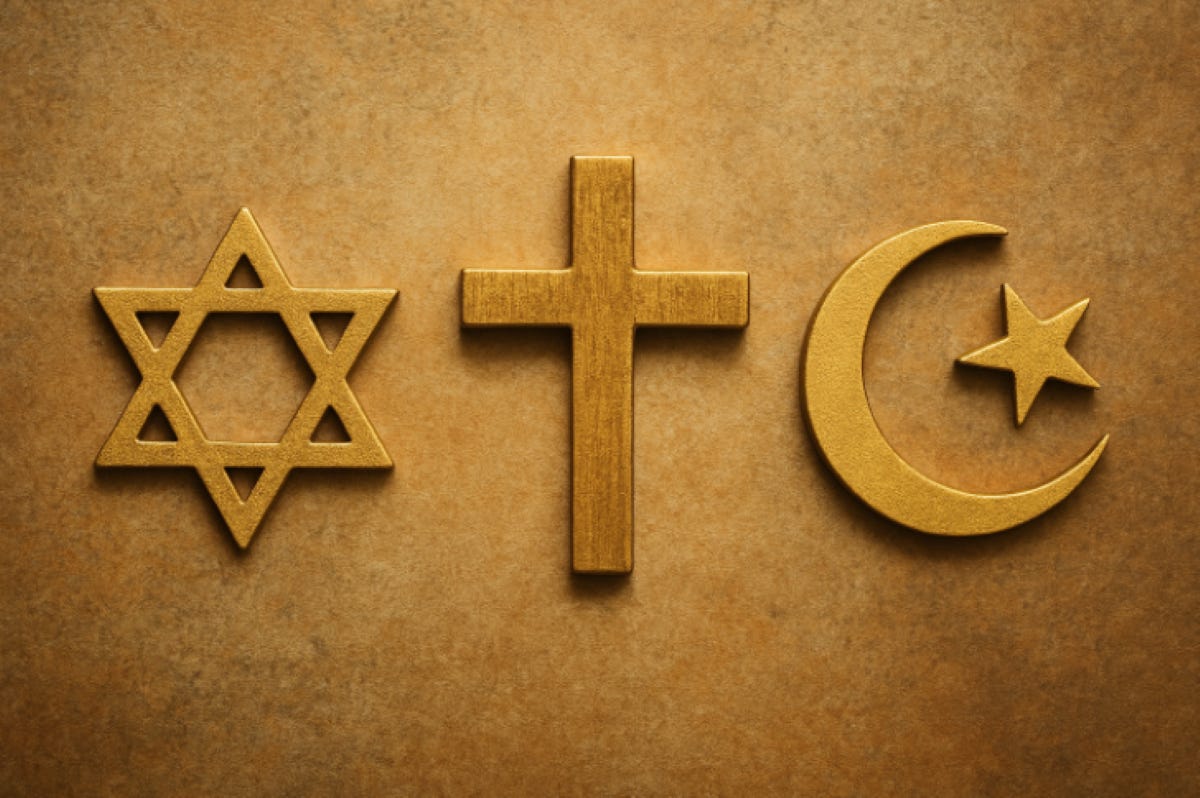
The question, at its core, can be reduced to this: which of the three Abrahamic religions is true? In other words, do the Jews, Christians, or Muslims have the true covenant with God?
Background
As a practicing, traditional Jew, I believe that Judaism is true and that the Torah was given by God, written down in shorthand by Moses as the Five Books of Moses, taught by Moses, and then by other teachers until written down as the Talmud. According to the “Old Testament,” God made an eternal—lasting forever—covenant with my ancestors that we accepted at Mt. Sinai, and He expects us to do our best to follow it to this day.
I believe that Judaism is the only belief system given directly by God. But—and this is a huge but—I do not believe that only Jews are “saved.”
Salvation
Judaism does not believe in salvation the way Christians or Muslims do. It is not a focus of Judaism. Judaism focuses on this world that God created and for which He created people. We do not believe in eternal damnation of burning forever. We do not believe that people who do not accept God (in whatever form) will face a grim eternity. We believe that actions are more important than beliefs” giving to the poor means more to God than asking God to help the poor.
The part of daily Jewish prayer that asks God’s help is written in the plural. Save us, not save me. And the salvation for which we pray is salvation from earthly ills such as illness, flood, loss of livelihood, war, hatred, and the temptation to live selfishly.
Heaven and Hell
Jews believe in an afterlife, the “world to come.” We believe that upon death, our soul leaves behind its physical shell (the body) and returns to God.i Anyone who does his or her best to follow the Seven Laws of Noah, explained below, has a share in the world to come. We might end up on different levels depending on our earthly behavior, but we all will end up in the world to come eventually.ii
However, I am also very much aware of three additional facts:
God created us to have free will, to make choices in this life. This means that sometimes we choose correctly and sometimes we make errors. He expects us to try. He does not expect us to choose perfectly. This is different from at least some branches of Christianity. When asked, “How are you?” financial guru and devout Christian Dave Ramsey replies “Better than I deserve.” This is not a Jewish reply. While we Jews err, we do not believe we are born sinful. We do not call ourselves sinners except in specific prayers designed to help us evaluate our behavior. Our job is to not focus on our mistakes but to continually strive to be better—to focus on the positive path, not to look backward or to kick ourselves for a trait that we were born with and cannot change (although we choose how to live with our inborn traits).
Judaism is difficult: we have 613 laws, some positive (do this) and some negative (don’t do this); some which I can keep (i.e., supporting the needy) and some which I cannot (laws specifically for the opposite sex). And since the beginning, Jews have faced persecution. Conversion to Judaism is not impossible, but it is difficult. It involves learning the basics of the religion and the way of life, and promising to live according to them.
Before God gave the Jewish people the Torah, He gave the world the Seven Laws of Noah, the laws necessary for a civil society:iii
Do not profane God’s one-ness in any way.
Do not curse the Creator.
Do not murder.
Do not eat a limb of a still-living animal (i.e., respect the life of all of God’s creatures)
Do not steal.
Sex is a gift to be used to build and strengthen families; use it responsibly according to God’s guidelines as spelled out in Leviticus.
Establish courts of law and ensure justice in the world.
These are the foundation stones of civilization. Without them there are anarchy and barbarism.
Belief in God
The Seven Laws of Noah do not include belief in God. They do preclude being disrespectful to God, but there is no requirement of belief. In other words, you don’t have to believe in God, but if you can’t say anything nice about God, don’t say anything at all.
The Tower of Babel
Long before the Ten Commandments were given at Sinai and after the Great Flood, when Noah saved humanity and the animals in the Ark, people spoke one language and understood each other. They decided to build a tower to reach heaven. They wanted to be equal to God.
“G-d decided to destroy their arrogance by destroying their ability to understand one another. He, therefore, confused the people by splitting them up into seventy different nations and tribes, each with a language of its own.”iv
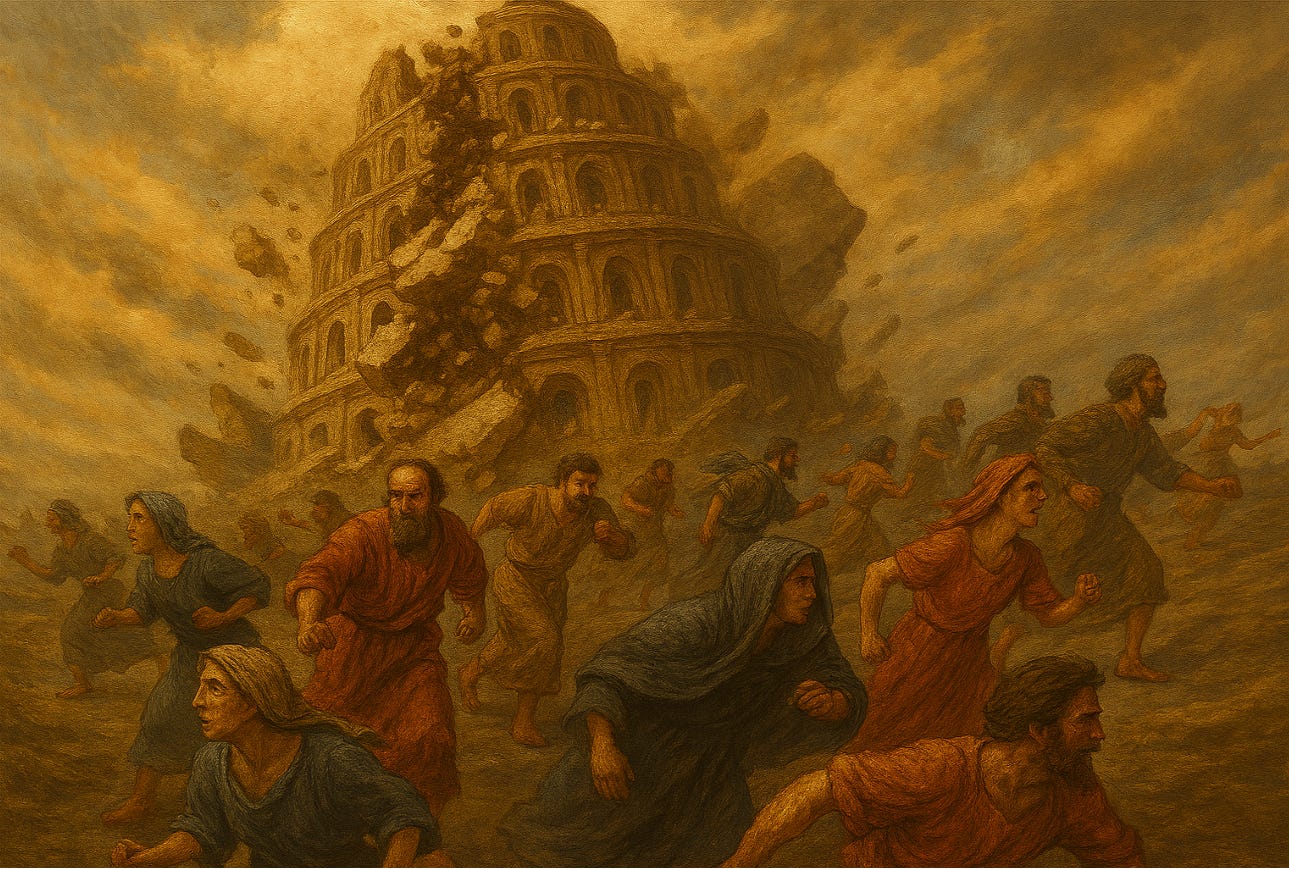
It seems to me that if God had only one way of reaching Him, and wanted only one way of reaching Him, this would have been revealed at the Tower of Babel. But there is no mention of Him mentioning this exception. Rather, the text states that he divided humanity into 70 groups that could not communicate with each other.
It is clear to me that God meant for each of the seventy nations to find its own way of reaching Him—in accordance with the 7 Laws of Noah; and within that broad framework, in accordance with each nation’s own cultural framework and reality.
Which Is The True Religion?
God is infinite.
Infinite means without end, without limits.
We learn from the fall of the Tower of Babel that God saw the dangers of a monolithic humanity and divided people to avoid this problem.
If we look at the world through the lens of history, we can see that when religious (or anti-religiousv) power becomes too centralized, it becomes dangerous. The Inquisition of Spain did not happen in a vacuum. It was only one, and perhaps the worst and longest, of numerous inquisitions begun in Rome by an administrative entity that used religion as a way of civil control.vi Communism, the anti-religion, killed more people in the 20th century than Hitler. Communist revolutions in Russia culminating in the USSR; Mao’s China, Pol Pot’s Cambodia; Castro’s Cuba; Maduro’s Venezuela; and many other smaller and/or less successful attempts attacked religious communities first. Islamic terror is a real force in many parts of the world; Jews, Hindus, Buddhists, and Christians are all among its targets.
Jews do not actively seek converts. We do not believe we have the only path to God. We believe we have a special relationship with God, with special responsibilities. In a healthy family, each child has a special relationship with each parent, based on the child’s special talents and needs. Why on earth (or in Heaven) wouldn’t the infinite, loving God care for all His children and allow them all to reach Him? Why would He create a reality where He would demonstrate His...love?...by damning for eternity anyone who lived a strictly moral life (the 7 Laws of Noah) but didn’t accept one specific way of speaking to Him?
I believe that God loves all His creatures. He divided us into different cultures for a purpose. That purpose did not involve setting up millions to be damned because they didn’t adhere to one particular belief system. I believe He gave each people special tasks and traits, although unfortunately most groups have forgotten this. The rich, tuneful voices of Black Africans and the Welsh; the meticulousness of Germans; the spare art of Japan and the incredible woven silks of China—today we call these stereotypes, but if we back off from political correctness we can recognize that there are cultural differences, with different groups excelling in different things.
We Jews have the tasks of bringing holiness into the world by following God’s instructions (“commandments”) and of modeling a society that works well. In spite of all its problems, Israel consistently comes out as one of the top 10 countries in the world happiness ratings. This is not a coincidence; it is a result of Jewish culture that is based on our focus on creating a civil society.
Christianity has done a better job than Judaism of educating the world about the Seven Laws of Noah: they brought civilization to nonbelievers across the globe. Many if not most of the great ideas spread by Christianity came from Judaism originally.vii
The Seven Laws of Noah are missing or only partially understood in many parts of the world. In them, lying, cheating, stealing, raping, and other horrible activities are considered normal. When a religion accepts or even promotes behaviors opposite the Seven Laws, in my opinion that is proof that the religion cannot be truly the word of God. For us to accept those beliefs in the name of “multiculturalism” is breaking the first of the Seven Laws: to say God wants a man to send his son to blow himself and others up is to worship a different god, a god of death.
Solution
It is time for Christian and Muslim leaders to recognize that God does not want monolithic groups among people. He discovered millennia ago that when societies or factions get too large, bad people take power and bad things happen. Carrying this over to religion, it means that He loves and accepts any people who follow His basic laws for a civil society, whatever they call Him or however they worship Him—or whether they pray at all. He wants His creatures to live good lives in the good world He created, and this can only happen when the same basic laws are followed by all.
To simplify: why would a god, a loving god, divide humanity into many different cultural/linguistic groups and then demand one monolithic way of speaking to and with him? This belief simply does not make sense. It breeds hatred and fear, two emotions that are contrary to the kind of civil society created by the Seven Laws of Noah.
The Seven Laws say Don’t Disrespect God. They do not say Pray to God. They say There is only one God. They don’t say There is only one way to approach God. They say, if you don’t believe, fine; just accept that God is a possibility, don’t go out of your way to disrespect Him (on the “off-chance” you are wrong and there is a God), and don’t go worshiping trees, stones, gold, or power.
If we could get to this point, it would be easier to respect each other. Maybe then we would actually have universal peace, and people around the world could live happy, productive, secure lives.
i https://aish.com/heaven-and-hell-explained/
ii The exception is the truly evil like Haman, who wanted to exterminate the Jews because of jealousy; or Stalin, Hitler and Pol Pot, who killed or whose policies killed millions for reasons based on politics and power. Our sages say that their souls end suddenly; they have no afterlife. Personally I hope that their souls see and comprehend what they are missing and why before they are zapped.
iii https://www.chabad.org/library/article_cdo/aid/62221/jewish/The-7-Noahide-Laws.htm
iv https://www.chabad.org/library/article_cdo/aid/1013006/jewish/The-Tower-of-Babel-What-Was-Up-With-lt.htm
v Every coin has two sides, but they are the same coin. Religious excess is backed by anti-religious excess.
vi Confession to a priest opens the door to blackmail and coercion. In recent years, improper sexual behavior by priests damaged hundreds if not thousands of young men (and possibly women). Who is to say that the occasional bad player has not stooped to other forms of control through misuse of a valuable spiritual exercise.
vii Many ideas are not explicit in the “Old Testament,” appearing in compilations of the Oral Law such as the Mishneh and Talmud. Jesus and his Jewish followers were well versed in the Oral Law so it makes sense that they taught what they had learned.