

The Second Iran War: Part 4
Random thoughts--because anything longer will probably be interrupted

Random thoughts and mental snapshots from the last few weeks in Israel:
If you’ve been following this publication you’ve learned that we have two types of interruptions: alerts, which say you’ve got about 8 minutes until huge ballistic missiles from Iran come your way, and alarms, which mean two things: if preceded by an alert, you’ve got less than a minute to get inside your heavy-duty shelter; and if not preceded by an alert, you’ve got to get to your protected space (such as my apartment hallway) immediately. And we mean immediately.
My dog recognizes alert and knows it means “sit near the door and wait for the leash” (Iranian). She knows alarm means “go to the pillow in the hall” (Hezbollah, from Lebanon) and sit on mom’s lap.
Incoming missiles from Iran: Slip into shoes, use bathroom, turn off stove, leash dog, put on coat, tuck phone into pocket, leave, lock door, and walk (at age 80 one doesn’t run) to the communal shelter. Sometimes while on the phone to friend from another part of the country, who just might be returning from a shelter.
Most nights have been interrupted by alerts and alarms. Some creative genius put together this song. It really does say it like it is.
In the cities, many underground parking garages have been turned into shelters for those living in the apartments above. Some families are camping down there. In the video you’ll see tents set up in the garages.
What’s it like to be sitting in pajamas talking to neighbors at 3 am in the communal shelters? Religious and secular, Jew and ethnic-whatever-else, old and young? It is weird. No other word for it.
Here’s a picture of my neighbor’s “vehicles” stored in the shelter because of days of heavy rains. If you’re an older woman (or married to one) you know what a problem it can be not to get to the potty quickly. When you’re 80 years old, gotta go, and have to move a heavy bike to enter the stall and close the door...grrrrr.

If mail were being shipped from overseas, Everdries would be doing a land-office business from Israel right about now. By the time shipping begins again, we won’t need them.
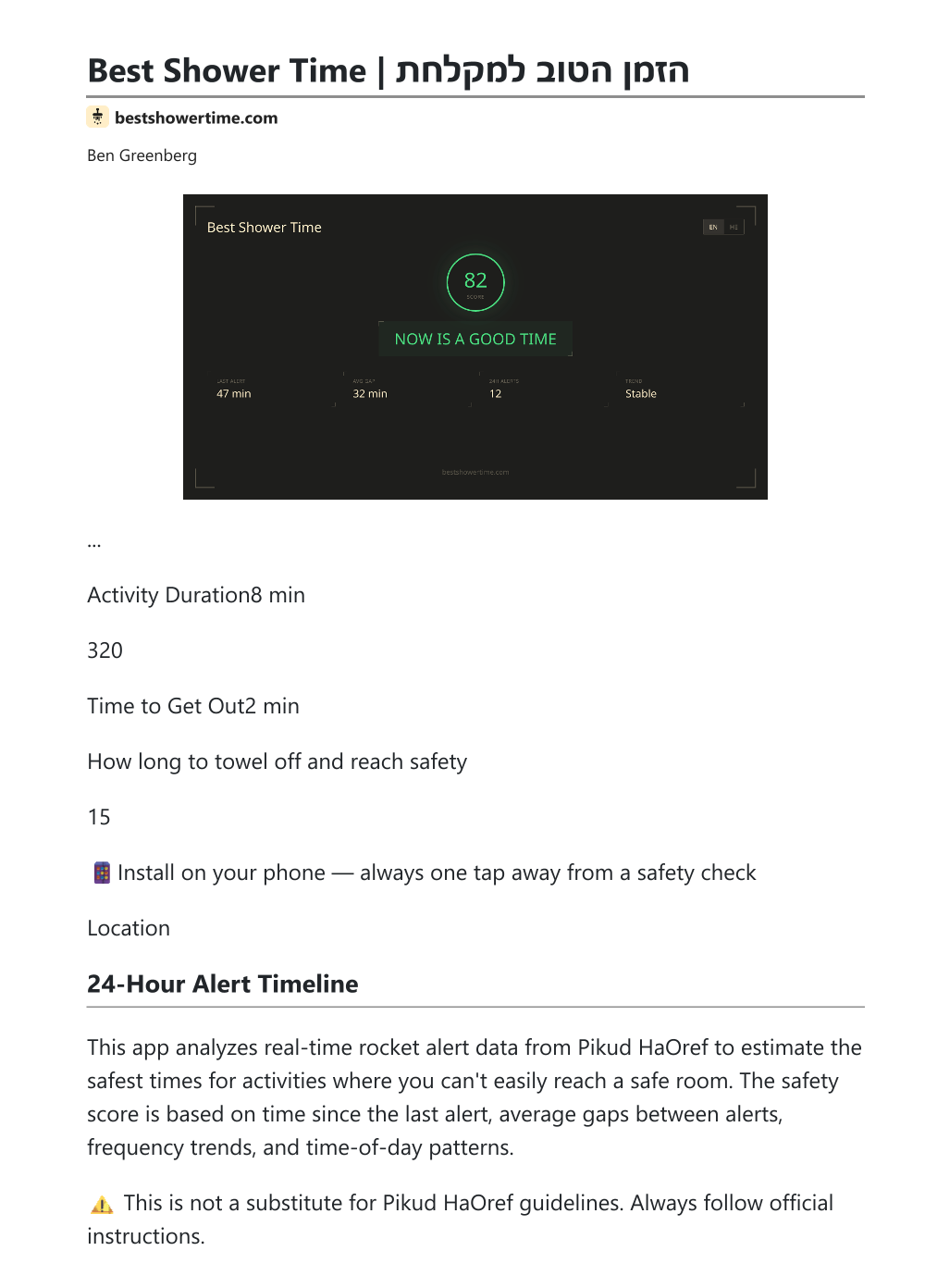
There are several Hebrew apps and websites where you enter your location and the app will tell you what percent chance you have of being interrupted by an incoming missile alarm. You can use the Go For Walk, Shower, or Nap versions to find out whether you (probably) have time for these three activities. A friend swears by them. She was caught once with shampoo in her hair and doesn’t want that to happen again.
Right now, 45 minutes after we returned from the shelter, the app tells me it’s an okay time for a shower.
My friend in Jerusalem told me that she visited a hospitalized friend, who was in Parking Space 147 of the hospital’s underground parking garage, the Internal Medicine Department.
Someone is putting together a recipe collection of meals that can be made in spurts, such as stop mixing, or shut off stove for half an hour, then return to the heat.
Where I live, we are most likely to have attacks between 2:30 and 3:30 am, 6:00-7:30 am, and around 5:00-6:00 pm. Of course, they also come other times, but those times they are likely and not just sporadic.
We had two nights in a row without alerts, but on the second night my neighbors had a screaming fight in the plaza outside my windows at 3 am. It ended shortly, I fell back asleep, and then at 4:10 they resumed their fight. The next night we didn’t have an alert, but I couldn’t sleep. My body was waiting for either an alarm or a fight.
Other neighbors spent the Sabbath with his parents in a coastal city in the south. Drove home Saturday night, heard sirens several places but not directly where they were, so they just kept driving.
Another friend and her husband were in the USA for a 2-week vacation. Their plane actually left earlier than anticipated, but then did some detours over the sea before it was safe to land. They were rushed from the tarmac to the airport building quickly.
It’s wartime, and El Al, Israel’s national airlines, is still busy ferrying home Israeli citizens who were trapped overseas. When there’s a war on, foreign students and tourists leave. Israelis return, wanting to be home, helping.
The time between Purim and Passover is a big time for weddings, but since large gatherings are forbidden due to security concerns, many couples have ended up with very small weddings, as were held during Covid. But doing them on zoom? Not sure; not infrequently our internet is shut down or otherwise compromised by the war.
Having babies. In 2025, the number of babies born here broke all records. It’s not just because people might have been stuck home with not much to do. It’s because having more babies is a way of thumbing one’s nose at those who wish we didn’t exist. And because babies make everything sweeter.
Someone posted in a Facebook group for people contemplating moving to Israel that she’d like to live in the north when it becomes safe. I commented that that means she will wait until the Messiah comes, which may be a long time so she should just come anyway. As Psalm 127 says, “Unless the Lord watches over the city, the watchman watches in vain.”
Speaking of psalms, many people are filling empty moments, including time in the shelters, reciting them. One site lets people open recitations asking for any need; I’m using one that that asks for healing for all the wounded and sick in Israel. The site offers a psalm, you read it and click “read,” and it asks if you want to read another. You can choose not to read the one chosen—say, you have only a few minutes and the psalm up is 119 (the longest), and it will offer you a shorter one. You can choose your preferred language. When all 150 psalms have been said, the site rolls over to the next and begins again.
Three supermarkets are on one road, and the nearest bus line to me passes there. But I’ve taken more taxis in the last 3 weeks than in the last 6 months. Buses only run twice an hour. I don’t want to wait outside for the bus, even though there’s a little shelter nearby.

I was going to start making the pieced valance for my living room that I’ve been planning for a couple of years. Got the fabrics out, started figuring out which blocks will be in which colors. But the interruptions have made concentration too difficult. Grrrrrr.
Oh yeah—Passover is next week. Really. Today’s March 23; the seder (first seder outside of Israel) is April 1. So that means with all the other nutso stuff, we have to get rid of all the hametz (mostly grain-based foods, including crumbs), which means, at a minimum, cleaning the kitchen thoroughly.
After several years, I finally really organized my spices. I have both American seasonings (a variety of herbs and seeds like dill and fennel) and Middle Eastern (mostly tree and root spices like cinnamon, ginger, turmeric, and cumin, plus the peppers: hot Moroccan paprika, which substitutes for cayenne, which is not available where I live; sweek Moroccan paprika, regular sweet paprika, and other things I’d never used before). And I have lots of blends: two chili powders, several chicken rubs, ras al-hanout, curry powder, garam masala, and on and on. I’ll put a garbage sack over my spice cabinet for Passover because for the holiday I only use a few special “kosher for Passover” spices.
I can’t find any canned tuna that is kosher for Ashkenazi Jews over Passover. Labels for every prepared food have to be checked carefully if, like me, you’re Ashkenazi because the majority of people here are Sephardi/Mizrachi. I know, I know, the US media is filled with bull about Israelis being “white European colonizers,” but we are in the minority here.
On Passover, Sephardi/Misrachi can use kitniot, a classificiation that includes foods that are not hametz, but which Ashkenazi rabbis, generations ago, believed could be confused with hametz and so were forbidden. To be fair, until the last century these were mostly foods that were rare in Europe. I won’t go so far as to say that Ashkenazi women want to marry Sephardi men so they can eat kitniot on Passover, but it certainly is an appealing trait.
So…this is a very disjointed post. That’s because our thoughts are so often interrupted by alerts and alarms. Just before I finished this, we had an alarm because of a “hostile aircraft intrusion.” These are armed drones. Our wonderful airforce is great at shooting these down.
Speaking of shooting down drones, a good friend and her husband were traveling last week when the part of the highway they were on was under attack. Following instructions, they pulled over and ran away from the cars, toward a roadside shelter. My friend looked up because of the noise: the drone was almost directly overhead, being shot at by an airforce helicopter. She said if she hadn’t been so scared she might have enjoyed the excitement—like being in a movie.
And speaking of scared—back in 2024 when Hezbollah started firing missiles at us, I understood the meaning of the expression “His bowels turned to water.” That’s fear. But now—now these blasted alarms are annoyances, not terrors.
That’s how we Israelis manage. Disjointed or not, today I said my prayers, went grocery shopping, got my sunglasses fixed, walked the dog twice, cleaned my last food cabinet for Passover, played Bananagrams solitaire, made a pot of veggies and beans, and was in the communal shelter three times and my own “safe space” twice. We are used to this. We don’t like it. We wish the Muslims weren’t set on world dominance and would let us live in peace. But this is home, and living our best lives in spite of war is the price of living here.
Please keep your prayers coming, and please pass on this publication to friends of yours who might find the antisemites convincing. Let them read what Israelis are really like. They might be surprised.
I love the part about the overhead drone and helicopter feeling like she was in a movie. I had the same thought last Shabbat walking to someone's house for a Shabbat meal. I had to run the best I could the rest of the way to their house (just a few houses length) and I felt like I was in a movie scene.