


Background
Israel has been at war since October 7, 2023, when Hamas and civilian terrorists crossed the southwestern border of Gaza and massacred the equivalent, per population, of roughly 44,000 Americans: over 1200 Israelis, many associated with Israel’s peace movement and active in supporting and providing employment, material assistance, and other help to Palestinian Gazans—in some cases the very individuals who injured, kidnapped, or murdered them.
Hamas, a proxy of Iran, shares a border at Israel’s southwest. Hezbollah, another Iranian proxy, functions out of Lebanon, to Israel’s north. Hezbollah has treaty-sanctioned freedom in southern Lebanon. This Muslim group, funded and trained by Iran, is separated by history and religion from the majority of Lebanese, who have been Christian practically since the beginning of Christianity. While they speak Arabic, the majority of Lebanese are not Arab (originating in Arabia). On the other hand, predominantly Palestinian Hezbollah are Muslim Arabs who have destabilized and colonized Lebanon.
Hezbollah has attacked northeastern Israel—Israel’s panhandle—consistently and northwestern Israel sporadically for years. Israel has responded with small, targeted attacks, removing terrorists and missile sites. But shortly after the war in Gaza began, Hezbollah stepped up its missile attacks on northern Israel, which then began fighting Hezbollah in earnest. To date Israel has driven most Hezbollah members and supporters tens of kilometers north, reducing the possibility of terrorist infiltrators and lengthening the distance their missiles have to go. This gives Israelis up to 30 seconds to take shelter instead of the 5 to 15 seconds we used to have.
The ceasefire with Lebanon has, in practical terms, meant that Israel has ceased bombing Beirut and environs. Pin-point targeting of Hezbollah military sites such as offices, munitions factories, and weapons depots located within those areas has, for the time being, stopped.
This does not mean Hezbollah has stopped attacking northern Israel. Attacks by Hezbollah’s missiles and, more frequently, explosive drones, have continued ceaselessly. Shelling near the border has also continued, as those of us living on the “confrontation line,” that is, on or within a few kilometers of the border with Lebanon, know well.
Geographic note to those wondering why we live near the border: Everyone in Israel lives near a border. The country is about the same size in square miles as New Jersey, but has so many kilometers where it is very narrow that it is nearly twice as long as the American state.
Hezbollah’s missiles are small, and many are unarmed; the explosive drones, however, explode (duh). New residential construction includes a “safe room,” a reinforced space built to withstand attacks. Older buildings, however, do not. As a result, many people, this author included, shelter in the safest part of their home. For me, that is a central hall with no windows. Unless the part of the home where we have taken shelter receives a direct hit we will almost certainly survive a Hezbollah missile strike, probably uninjured.
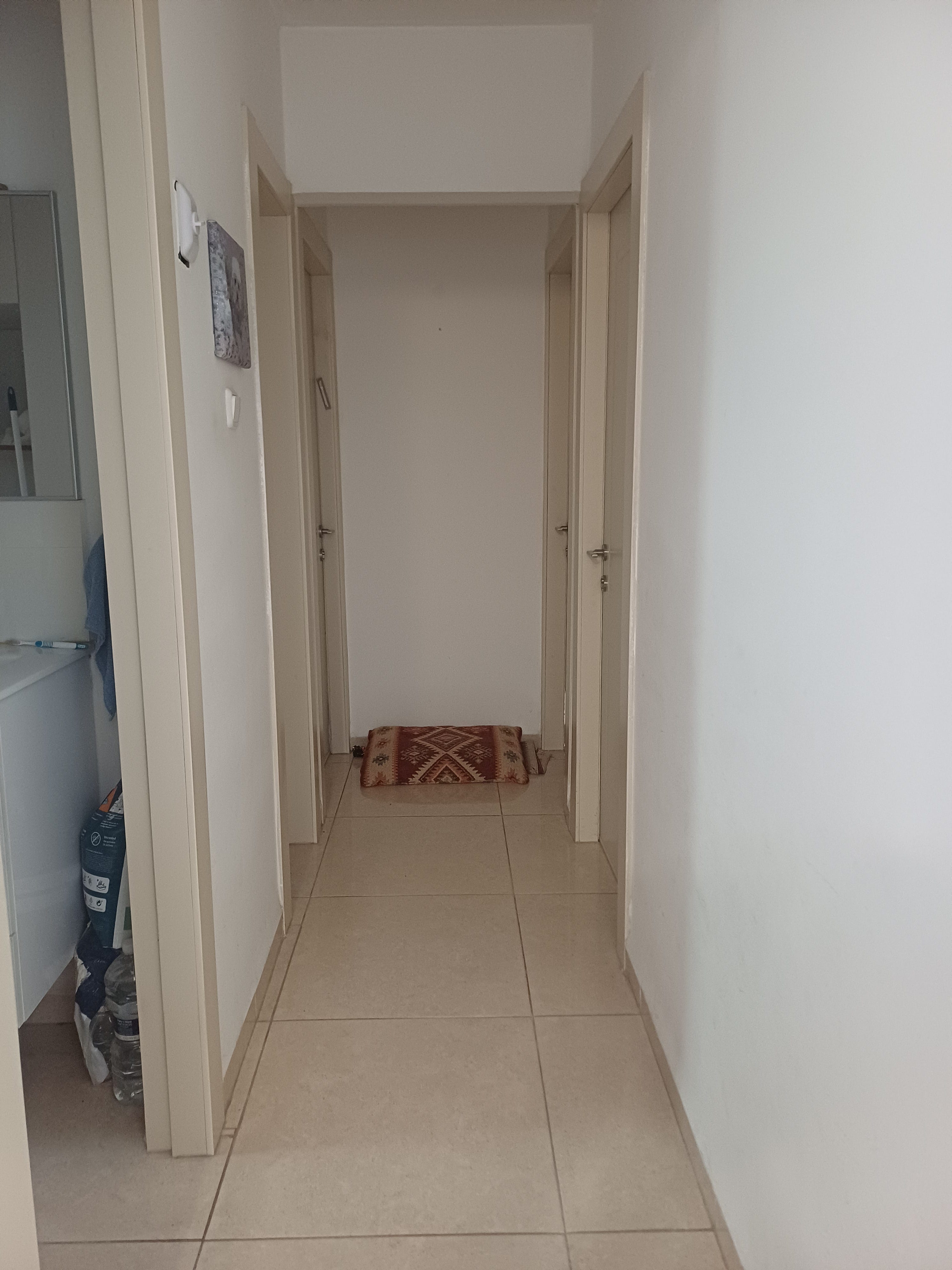
But the Iranian missiles are ballistic: they are huge and explosive. They can take down whole buildings. Without a reinforced “mamad” or safe room, I and others like me must go to the nearest reinforced shelter to be safe from them. This means that at night we must wake up, rise (not easy for elderly or those with mobility issues), put on slippers or shoes, a head cover if religious, and a bathrobe, waken children, leash or put in a carrier any pet that will go to the shelter. The upside: we get the warnings to get to the shelter far in advance (8 minutes in my case).
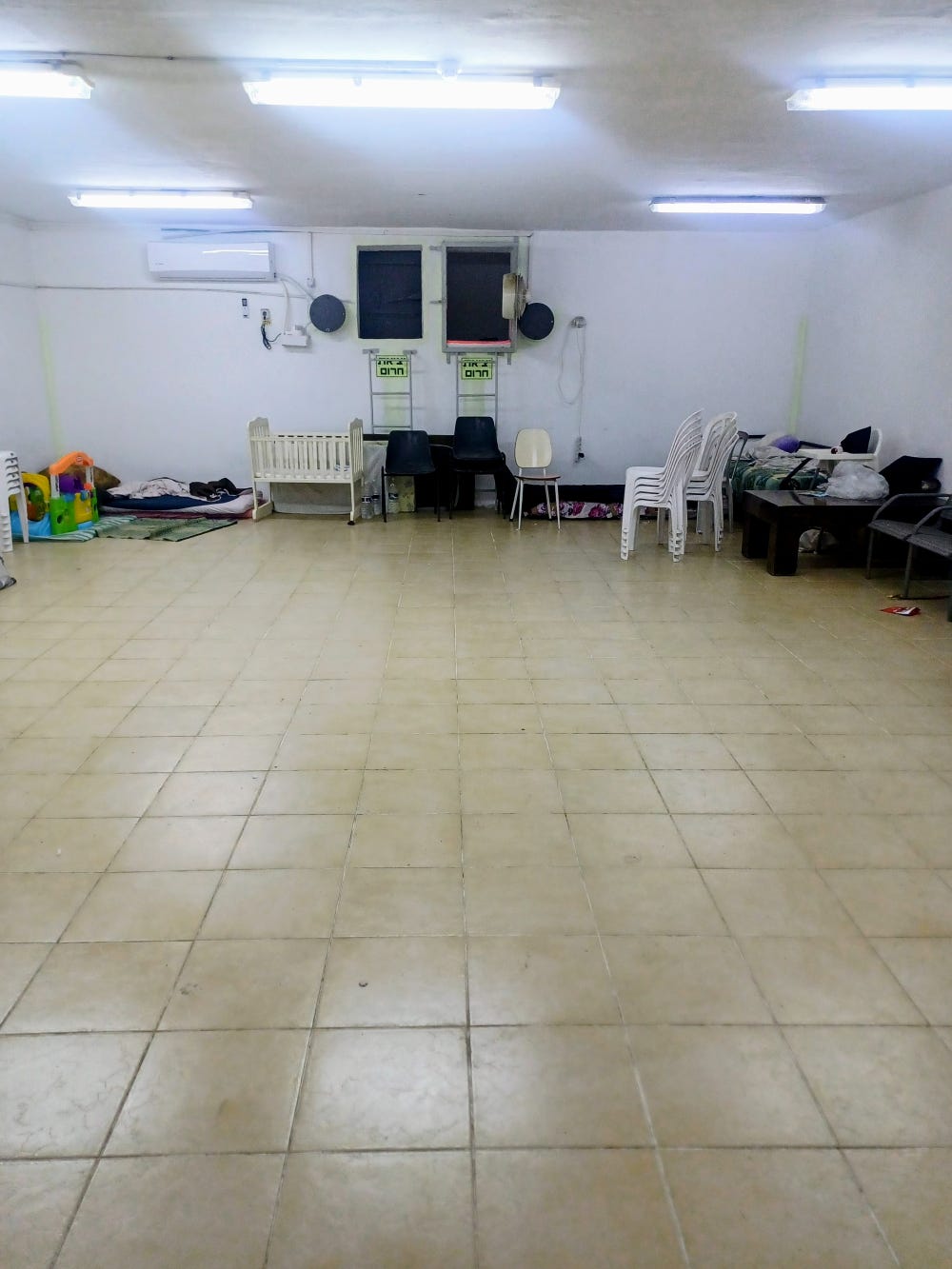
Because it takes about 10 minutes for the parts of the destroyed missiles, the shrapnel, to fall to ground, we must stay in the shelter for that full time. The majority of injuries from attacks are from falls incurred when people run to shelter and those who leave shelters early and are struck by shrapnel.
Living with the Ceasefire
While Iran sent missiles day and night, the majority of night-time sirens came around midnight and between 2:00 and 4:00 AM. just in time to destroy both early-night deep sleep and the shallower sleep of late night/early morning. These nocturnal missiles retrained a population of 10 million. Without conscious thought, we learned to sleep lighter and to prepare for sirens.
Iran has stopped, for the time being, sending missiles to Israel. But we know that this is for the time being. They can and, unless a very large miracle occurs, will restart the war. Our bodies have stayed on alert. We know that we cannot let down our guard.
Lack of sleep, as nearly everyone knows,i has both emotional and mental symptoms that make daily life difficult. We have all been living with these symptoms since the beginning of the war.
We are still living with them. We are all making silly mistakes, responding angrily to things that would barely make a ripple in our normal life, nodding off during meetings, classes, and even just friendly conversations, and more.
While we are traveling more than we did during the war, most of us are still staying fairly close to home, since the war may resume at any moment. As a friend told me, “I don’t want to have to park at the side of a highway again, run into a near-by field, and stay prone in mud for ten minutes when I’ve driven into a missile attack, especially when I’m on my way to a business meeting. Been there, done that.”
While we still jump at thunder claps, we relax quickly. The sounds of war don’t roll the way thunder rolls. We’ve learned to differentiate.
In our shops, many imported items are and have been, since October 2023, in short supply. Some produce is cheaper and more plentiful than before the war; pineapples are an example. Most of our crop was, for years, shipped to Europe. Locally, pineapples used to be very expensive if available. Now they are cheap and plentiful.
Shipping from China is normally through the Straits of Hormuz, which has been blockaded by the US-Iran war. I ordered a collar tag with my dog’s name and my phone number in January from a major Chinese exporter; it has not arrived. Before the war, their packages usually came within two weeks. I’d hoped that with the ceasefire, the tag would arrive.
Ordering from the USA is extremely expensive. Used books used to be available for $6-9 apiece, including shipping. Now an order of six used paperbacks costs around $130 to ship, plus the cost of the books. You read that correctly. Many places that stopped shipping to Israel during the war (little air traffic was allowed and shipping by sea was restricted) began again after the ceasefire; many other places still do not accept orders from Israel.
Within the last couple of weeks our Angloii community’s WhatsApp group had a conversation after midnight about what a recent very loud exchange of booms might be. Are they harmless? One night we learned they were the sounds of a Hezbollah ammo storehouse being blown up.

People who had put off elective medical procedures during the war took advantage of the ceasefire. But some people with new issues are putting off medical intervention because they don’t want to be isolated in a temporary ward in the hospital’s underground parking garage when the war resumes.
Kids are back in school But the spring here is filled with civic holidays in addition to the religious holidays of Purim, Passover, Lag B’Omer, and Shavuoth: Holocaust and Heroism Remembrance Day; Memorial Day; Independence Day; and Jerusalem Dayiii, commemorating the reunification of Jerusalem during the Six-Day War. These kids, whose education has been repeatedly interrupted—for the older ones, first by Corona and now by war—are now having school days broken up by holidays. Kids thrive on stability, but their lives have been extremely unstable. The uncertainty of the ceasefire has made it hard for many children to take their education seriously.
When international tensions are low, the only aircraft flying over my region are crop dusters. During the war, that changed as we are en route from military airbases to Lebanon and Syria. But during this ceasefire, some nights the sounds of planes seems to continue for hours. At the beginning, I was awakened by the sound of planes moving from the east to the west as our air force returned from Iran. The other night I heard them moving to the east. War? Preparedness exercise? Who knows? All I know is that the sounds of aircraft, especially in the small hours of the night, have new meaning as we wait for the resumption of war.
My friend’s son studied hard for his bar mitzva.iv With the ceasefire, relatives living in the center of the country planned to attend the ceremony. But with war possibly returning at any moment, they decided to stay home. Synagogue attendance was limited by the civil defense agency based on the number of people who could be accommodated in the synagogue’s small shelter. Instead of a large celebration, the family had to resort to a family-only event with a big, outdoor pot-luck brunch: it had been impossible to have the affair catered since neither the caterer nor the family could know whether anything would, in fact, be permitted or if we would all be back, huddling in shelters.
Last week I was wheeling my grocery cart from the supermarket to the bus stop when I heard a siren—not the one in my immediate location, but near. I and everyone else froze, waiting. Would our siren be next? After a moment or two of silence, we all moved again, back to our routine.
My dog, who runs to the door with an alert for an Iranian attack and to my in-home safe space when the alarm indicates Hezbollah, has awakened me several times hearing attacks on near-by communities. I’ve been told that those places are near Israeli army encampments. Without an encampment, my city is not a major target.
Conclusion
We are still at war with Hezbollah, but the optics for the world work better for them if the world doesn’t realize what they are doing, so the attacks are sporadic and relatively few, compared with pre-ceasefire. They are still disruptive.
I write this on a Tuesday; Thursday evening is the holy day of Shavuoth, commemorating the giving of the Torah on Mt. Sinai; and immediately following is the Sabbath. We Jews celebrate at the synagogue and at the dining table. We are inviting guests and accepting invitations for the holiday and Sabbath meals, wondering whether we will actually be able to host or visit or, as occurred on Purim, we will be tied to a shelter with an 8-minute tether. After all, the Yom Kippur War began on that holiday; the 6-Day War began one week before Shavuoth; the October 7 War began on the holiday of Simchat Torah; Hezbollah stepped up its attacks the week of Purim; and the Iranian war began the week before Passover. What will happen on Shavuoth?
No one wants the war to resume. At the same time, it might be a relief. The uncertainty is, in many ways, worse.
i Sleeplessness and interupted sleep: “Mental & emotional symptoms: cognitive impairment: difficulty concentrating, memory lapses, and a reduced ability to process complex information or make decisions; mood changes: increased irritability, heightened anxiety, and emotional volatility. It often feels much harder to manage stress or stay patient. Microsleeps: brief, involuntary moments of sleep that last a few seconds, which can be particularly dangerous while driving or operating machinery; reduced alertness: slower reaction times and a general feeling of mental ‘fogginess.’ Physical symptoms: fatigue and lethargy: a persistent lack of energy and physical weakness throughout the day; coordination issues: increased clumsiness or a lack of balance, similar to the effects of alcohol impairment; appetite fluctuations: changes in hormones...often lead to increased cravings for high-calorie, sugary foods; weakened immunity: greater susceptibility to common illnesses, like colds or the flu, as the body’s defense system is compromised. Long-term effects: If sleep deprivation becomes chronic, it can lead to more serious health complications, including: increased risk of cardiovascular disease and high blood pressure; metabolic issues, such as an increased risk of Type 2 diabetes; persistent mental health challenges, including depress. Note: if you are experiencing persistent sleep issues that interfere with your daily life, it is best to consult a healthcare professional to rule out underlying conditions like sleep apnea or insomnia.” --Gemini AI, May 19, 2026, 7:10 AM
ii “Anglo” in Israel means English-speaker. Our Anglo WhatsApp group includes people from the USA, Canada, the UK, South Africa, Australia, at least one Russian who lived in the USA a few years, and at least one native Israeli English teacher.
iii Between 1948 and 1967, Jerusalem was divided between Jordanian and Israeli control. It was reunited during the 6-Day War.
iv Many Orthodox boys learn the Torah portion for the week they were born and read it for the congregation on the Sabbath of that week. This takes a very long time because the Torah is written without punctuation or “trop,” an orthographic system that indicates tune and expression. The boys need to learn their portion well enough from a book that has the markings that includes vowel dots and the trop so that they can read aloud fluently from the Torah scroll, where these markings do not appear.